
How the US turns its debt problem into a eucatastrophe
'Never bet against America' - Warren Buffett.

Every few days, someone declares the U.S. is finished. Debt’s exploding. The Fed’s printing money.
There is the growing sense that the story is heading toward an inevitable collapse.
Popular figures like Ray Dalio, Robert Kiyosaki, Michael Burry (Big Short) make headlines.
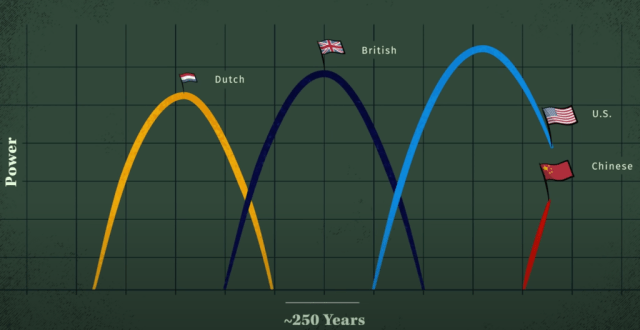
But sometimes, what looks like a catastrophe is just the setup for a turn.
J.R.R. Tolkien had a word for that: Eucatastrophe. The word joins “eu” (Greek for good) and “catastrophe” (the turning point or downfall in classical drama).
It’s the opposite of a tragedy: a sudden reversal from despair to redemption. He described it as “the sudden joyous turn in a story which pierces you with a sense of joy that brings tears.” It’s the moment when everything seems lost, and then things reverse toward redemption.
It’s not a cheap twist. It feels earned and deeply moving, as if light broke through at the last possible moment.

Examples:
The Lord of the Rings: Frodo fails at Mount Doom. The Ring isn’t destroyed by his will, but by Gollum’s fall.
The Hobbit: The eagles’ arrival in the Battle of the Five Armies.
The thing with sounding alarmist is that it makes you sound smart. Algorithms and media also reward negativity and love it (watch the movie Nightcrawler on this topic).
Pessimism feels intellectual. Optimism just feels risky or naive.
Yet, if you’d followed every crash call over the past century, you’d have sounded clever, and missed every bull run.
There’s always been a reason to panic. Wars. Inflation. Oil shocks. Bubbles. Politics. Ray Dalio’s social media and often-cited “big debt cycle” often points this eventual collapse.
I’ve been asking myself: what is the alternative to this? What if the story doesn’t end in collapse?
What if the U.S. manages to grow through its debt instead of crashing under it?
What would that “miracle” actually look like? Not under blind optimism, but a rational path forward?
What if the structural problem everyone fears is also the setup for a stronger renewal?
The Miracle Mix
3 forces would need to work together: 1/ real growth, 2/ soft inflation, and 3/ smart central banking.
1/ There’s a lot of overlap between the 1950s, but updated for the 2020s. After World War II, the U.S. had a debt-to-GDP ratio above 120% (roughly where it sits today), yet it spent the next two decades building: factories, highways, universities, and new industries. Ford, Boeing, IBM, and NASA were the Teslas, Nvidias, and Apples of their time. The economy expanded faster than the debt, and by the 1970s, the burden had effectively been cut in half.
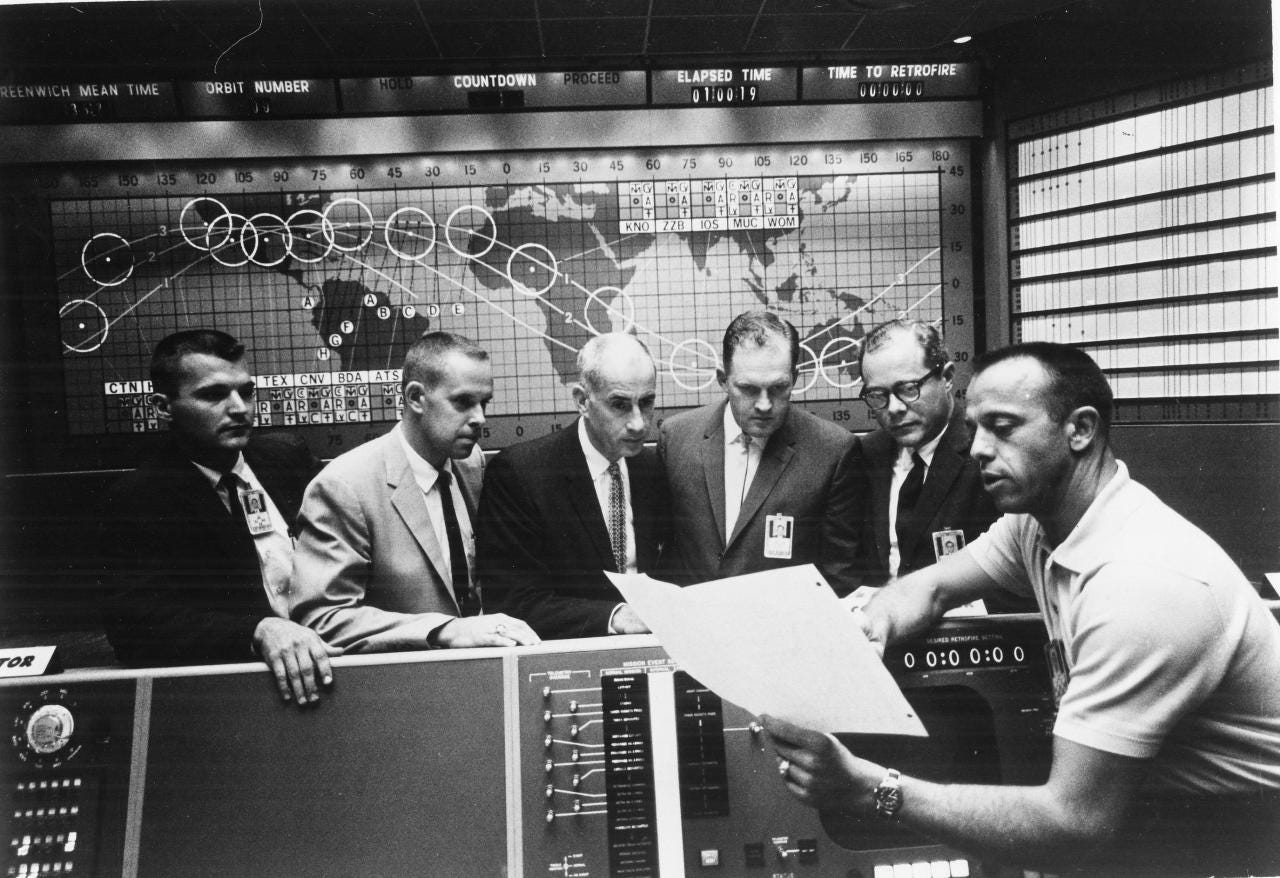
That same effort could work again, just with new tools: AI, robotics, clean energy, biotech, and automation. They’re real productivity drivers. If growth moves from around 2% today to 3–4%, that small shift can compound into a massive difference over time. The economy gets larger faster than the debt.
2/ At the same time, inflation can help.
If inflation runs around 3% while borrowing costs hover near 2%, the math flips in America’s favor. Over roughly 15 years, that small gap alone could reduce the real value of U.S. debt by a third. It’s not hyperinflation like Venezuela, it’s what the U.S. and the U.K. used after WWII to shrink their debt while keeping stability.
3/ And behind it all, the Fed and Treasury will keep working in sync. When the government runs deficits and there aren’t enough private buyers for its bonds, the Fed steps in. It buys those bonds, keeps yields capped, and stops rates from spiking. Japan has done this for over a decade. The U.S. did it after WWII. It buys time for growth to catch up.
It likely won’t be smooth or painless. We lived this firsthand with Sarwa a few years ago. We had to grow faster, launch new revenue lines, and cut costs, all at once. If I relate this topic to my lived experience, it felt the same: a huge leap on paper, but possible through persistence and adaptability. We stuck to the plan and reached profitability last year. Clearly, I’m biased, but there’s a parallel here. Economies aren’t that different.
Add those three forces together. Faster growth, soft inflation, and strong central-bank management, and even trillion-dollar debt loads start to look solvable.
Of course, it could also go the other way. If growth stalls, inflation runs wild, and confidence cracks, we get the full Dalio-style debt cycle reset. That means defaults, aggressive money printing, and a sharp drop in trust in the dollar. In that world, hard assets, gold, crypto, real estate, and commodities, should hold value while cash and bonds get crushed. It’s the painful reset version.
History has seen both versions. The 1930s. The 1970s. 2008. The system broke then rebuilt stronger.
If there’s one lesson that’s never changed, it’s that ownership wins.
Across every cycle, growth, inflation, or reset, the people who hold real assets have come out stronger. Strong businesses, property, equities, scarce stores of value.
PS: If you’re interesting the topic of US Dominance, read “Labyrinte of the lost:
The author explores the decline of global balance and how different civilizations have tried and failed to offer a credible alternative to the Western (mainly American) model.

Amin Maalouf uses Japan, Russia and China as case studies to illustrate the failure of successive global powers to build a sustainable counter-model to the United States since the mid-20th century.
Japan tried through economic power and modernization without military expansion, but its model remained dependent on the U.S.
Russia (Soviet Union) tried through ideology and force, but its system collapsed from within.
China tried through hybrid pragmatism, communist control mixed with capitalist growth, but it, too, is hitting limits as it turns inward and loses credibility abroad.
Maalouf’s point is that all three entered the “labyrinth”, trying to challenge America’s dominance, but got lost because none offered a truly universal, inspiring project for humanity.
Disclaimer:
This isn’t investment advice, just a different way to think about the US debt problem and about what’s possible.